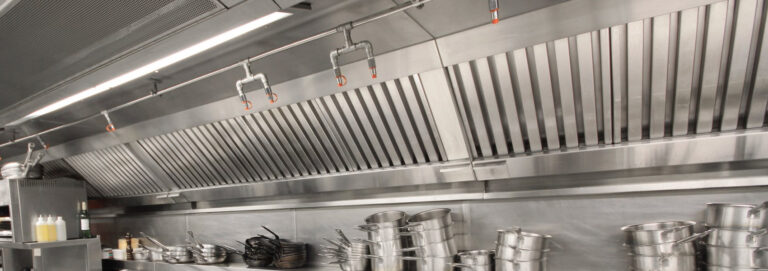
Grease is the fuel behind most commercial kitchen fires. It doesn’t just build up on the surfaces you can see. Over weeks and months it collects in filters, the hood plenum, and the ductwork running to the roof, where a single flare-up from the fryer or grill can turn into a fire that travels through the building.
That’s why hood and duct cleaning is one of the most important pieces of a restaurant’s fire safety routine. Here’s how to think about frequency, what a proper cleaning covers, and how it fits with the rest of your fire protection.
A proper cleaning goes well beyond wiping down the stainless steel. Our licensed technicians clean all accessible areas of the system according to manufacturer recommendations and fire code regulations, including hoods, ducts, and other components. The goal is to remove the grease deposits that can ignite, keep your kitchen ready for a fire inspection, and extend the life of your exhaust system.
You can read more about how this works on our Restaurant Hood and Duct Cleaning page.
There’s no single answer, because the right schedule depends on what and how much you cook. Fire codes and inspectors generally look at factors like:
As a rule of thumb, high-volume kitchens are cleaned more often than low-volume ones, and your local fire authority has the final say on the required schedule. If you’re not sure where your kitchen falls, we can help you set one that meets code.
Between full cleanings, grease filters do the heavy lifting of catching grease before it reaches the ductwork. Dirty, clogged filters reduce airflow and let grease pass straight through. Our Grease Filter Service provides quick filter exchanges on a weekly, bi-weekly, or monthly schedule, so your staff doesn’t have to spend time on it.
A clean hood is your first line of defense, but it works alongside the equipment designed to stop a fire that does start:
It’s a fair worry for any operator. Cooking has to pause during a hood and duct cleaning, but we schedule the work on-site at your convenience and work efficiently to minimize disruption to your operation.
Why does my restaurant need professional hood and duct cleaning? Grease deposits inside the hood and ducts can ignite. Regular professional cleaning removes that fuel, helps your kitchen pass fire inspections, and extends the life of the system.
Will my kitchen have to shut down during cleaning? Cooking must pause while the cleaning is performed, but we schedule around your operations and work quickly to keep downtime to a minimum.
How often should my suppression system be inspected? Commercial fire suppression systems, including restaurant hood systems, should be inspected at least annually, and some components may need quarterly checks depending on code and usage.
Can you handle more than just the hood system? Yes. Foster & Son manages fire extinguishers, sprinklers, alarms, pumps, doors, backflow monitoring, and emergency lighting, giving you one provider for your property’s fire protection.
What areas do you serve? We’ve served the Chicagoland area, Indiana, and Wisconsin for 38 years.